Restore Your Mobility with Advanced Surgery Abroad


What is a Hip Replacement?

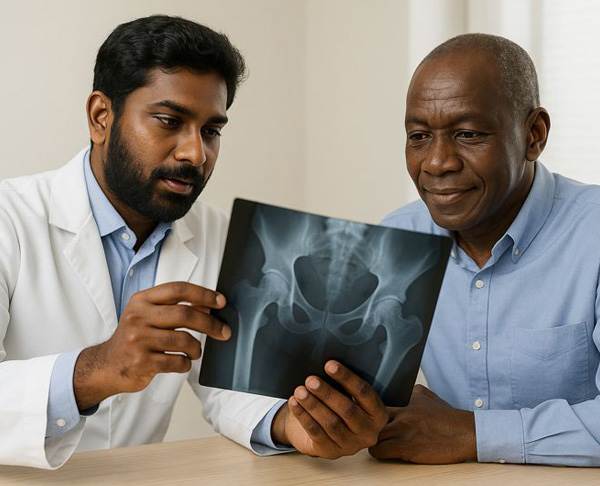
A hip replacement is a medical device surgically implanted to replace all or part of the hip joint. This procedure aims to relieve chronic pain, restore mobility, and significantly improve patients’ quality of life.

Medical indications

  • Hip osteoarthritis (coxarthrosis): progressive wear of the joint cartilage
  • Rheumatoid arthritis or other inflammatory joint diseases
  • Avascular necrosis of the femoral head (often linked to circulatory disorders)
  • Femoral neck fracture not treatable by other means
  • Congenital deformities or sequelae of hip dysplasia
  • Failure of a previous hip surgery (revision hip replacement)

Surgical Techniques Used

Our international medical partners offer the most advanced techniques, tailored to each patient’s profile :

1. Total hip replacement (THR)

  • Complete replacement of the joint: femoral head and acetabulum
  • The most common technique, ideal for active patients or those with advanced osteoarthritis

2. Partial hip replacement (Hemiarthroplasty)

  • Replacement of the femoral head only
  • Mainly used for fractures in elderly patients

3. Hip resurfacing

  • Maximum preservation of bone stock
  • Indicated for younger patients with good bone quality

Robot-Assisted Surgery : Maximum Precision

In some partner centers, hip replacement surgery is now assisted by surgical robots—cutting-edge technology offering numerous benefits:

  • Ultra-precise 3D preoperative planning
  • Optimal implant positioning, with margins of error reduced to less than one millimeter
  • Less bone loss and perfect hip alignment
  • Faster recovery and better pain control
  • Extended implant lifespan

Robotic assistance is particularly recommended for young, active patients or those with complex anatomy. It represents a major advancement in modern orthopaedic surgery.


Post-Operative Recovery : What to Expect

Recovery after hip replacement is rapid in most cases, especially with modern techniques.

Mobilization Timeline


  • Day 1 or 2 after surgery: the patient stands with the assistance of a physiotherapist
  • Day 3 to 5: independent walking with crutches or a walker
  • Week 2 to 3: gradual return to walking with reduced support (use of canes)
  • 1 to 2 months: return to normal daily activities

Required Rehabilitation


Supervised rehabilitation is essential in order to:

  • Strengthen the hip and thigh muscles
  • Improve range of motion
  • Prevent dislocation and imbalance
  • Relearn daily movements (climbing stairs, bending, getting into a vehicle, etc.)

Recommended Length of Stay

  • Post-operative hospitalization: 3 to 6 days
  • Recovery in a medical residence or medicalized hotel: 7 to 10 days
  • Recommended total stay (including pre-operative preparation): 2 to 3 weeks

Contact our Medical Experts

Our bilingual medical team (French / English) is available to review your case and organize your stay safely.

  • Free quotation
  • Surgical opinion within 48 hours
  • Personalized support


Take back control of your mobility. Contact us today.


All © Rights Reserved by Med Elite Experts Pvt Ltd.

Designed By Mirackle Solutions